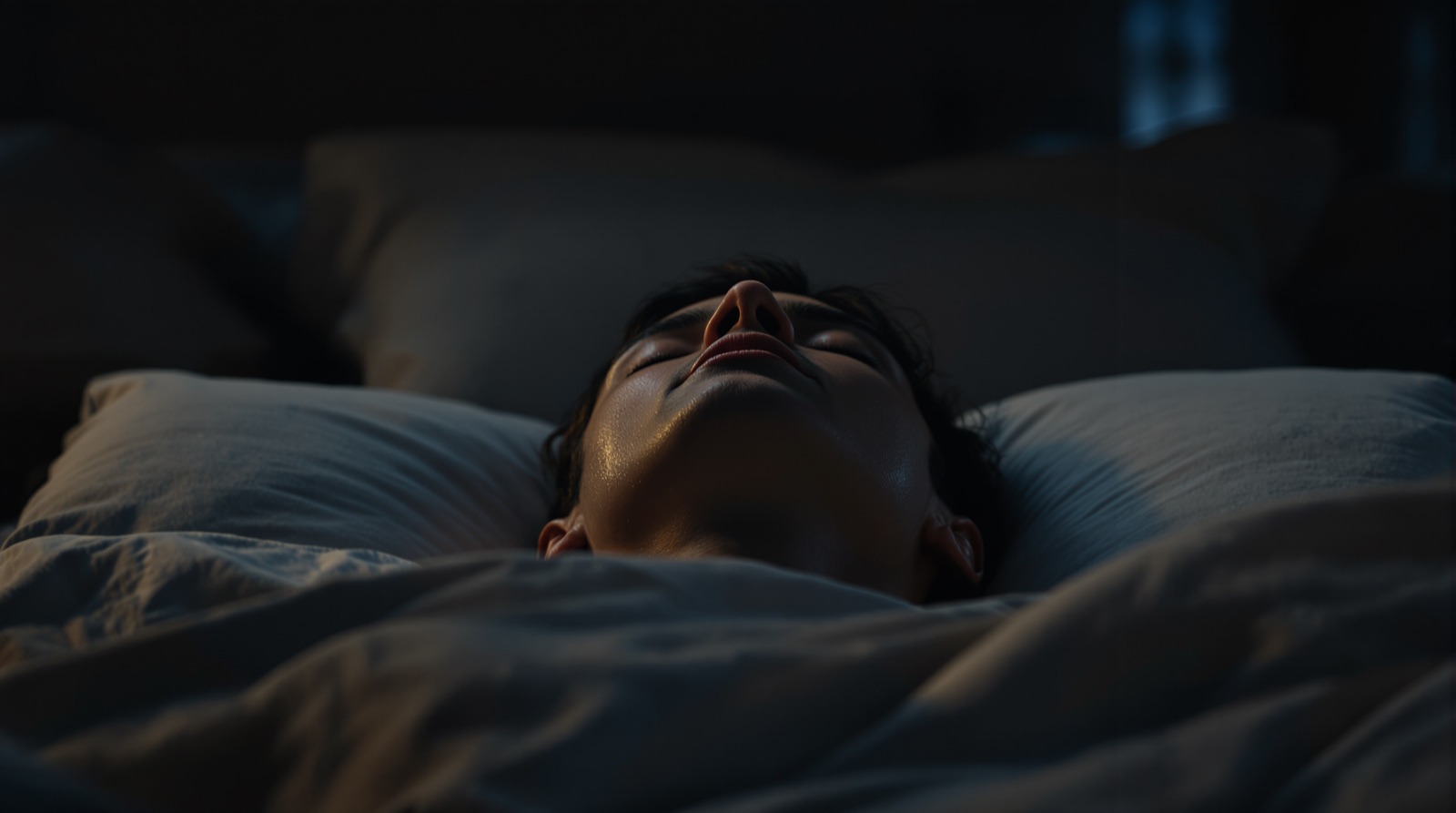
Do I Snore? How to Find Out (Without a Sleep Lab)
"Do I snore?" is one of those questions that's surprisingly hard to answer for yourself — you're asleep when it happens. Maybe a partner has complained, maybe you wake up with a dry throat, or maybe you just suspect it. The good news: you don't need a sleep lab to find out. Here are five practical ways to learn whether you snore, ranked roughly from least to most objective, plus how to tell when your snoring is worth a doctor's attention.
TL;DR
- A bed partner is the most common signal — but unreliable and not always available.
- Wake-up symptoms (dry mouth, sore throat, morning headache) are clues, not proof.
- Recording yourself is the only objective way: audio snore apps, or a sleep camera with video + a Snore Score.
- Snoring alone usually isn't dangerous — but loud snoring with pauses or daytime sleepiness warrants a doctor.
How to find out if you snore
1. Ask your bed partner
The classic method, and the one most people start with. If you share a bed, your partner has almost certainly noticed. It's free and immediate — but it has real limits. Partners habituate to snoring and stop noticing it, sleep through it with earplugs, or remember it as worse (or better) than it was. It's also unkind to make someone else your only monitoring device night after night. And if you sleep alone, this option simply doesn't exist. Treat a partner's report as a strong hint, not a measurement.
2. Check your wake-up symptoms
Your body leaves clues even when no one's watching. Snorers frequently wake up with:
- Dry mouth or sore throat — from breathing through an open mouth all night
- Morning headache — often dull and frontal, easing within an hour of waking
- Unrefreshing sleep — you slept "enough" hours but feel like you didn't
- Daytime sleepiness — nodding off in meetings, at your desk, or behind the wheel
None of these prove you snore — they overlap with plenty of other causes. But if several show up together, snoring (or something disrupting your sleep) is a reasonable suspect, and it's worth moving on to actually recording a night.
3. Record yourself — audio snore apps
This is where you stop guessing. A snore recording app listens through your phone's microphone overnight, flags the noisy stretches, and lets you scrub back through them in the morning. Hearing your own snore for the first time is usually all the confirmation anyone needs. Audio apps are simple, cheap (often free), and answer the basic "am I snoring?" question well. Their limit is that sound alone can't tell you much about why — your sleeping position, whether your mouth was open, or whether the snore was followed by a pause. See our roundup of the best snore recording apps if you want to start there.
4. Record yourself — a sleep camera (the most objective at-home method)
Audio tells you that you snore; video tells you the whole story. SnoreCam is a private AI sleep camera for iPhone that records short captioned video clips — with audio — when it detects snoring, sleep talking, or coughing. Instead of a wall of sound to scrub through, you wake up to a handful of clips of the actual moments, plus a nightly Snore Score (0–100) and an intensity timeline so you can answer not just "do I snore?" but "how badly, and when?" Because it captures position and mouth-open vs. closed on video, it's the most objective answer you can get without a clinic.
It's also the most private. The AI is a MiniCPM-V 4.6 vision-language model bundled inside the app, so everything runs on-device — no servers, no cloud, no upload path at all. Clips are encrypted on the phone and never sent anywhere, and it works in airplane mode. There's no chip requirement beyond iOS 26. And you can find out for free: the first 3 nights need no card (they're non-consecutive and never expire), after which it's $9.99/mo or $59.99/yr — while live preview and live captions stay free forever. Three free nights is usually more than enough to settle the "do I snore?" question for good.
5. A home sleep test or doctor (if apnea is suspected)
If recording yourself reveals loud snoring with pauses, or you have the daytime symptoms above, the next step isn't another app — it's a clinician. A doctor can order a home sleep apnea test (HSAT) or an in-lab study that measures oxygen, airflow, and breathing events directly. That's the only thing that can actually diagnose sleep apnea. An app can show you that you snore and how loudly; it can't read your blood oxygen.
Snoring vs. something more serious
Most snoring is harmless — the sound of relaxed airway tissue vibrating as you breathe. It's annoying, not dangerous. The version worth taking seriously is snoring that's part of obstructive sleep apnea, where the airway repeatedly collapses, breathing stops for seconds at a time, and you wake just enough to gasp it back open — dozens or hundreds of times a night without remembering any of it.
The tell-tale acoustic pattern is loud snoring, then silence, then a gasp or snort — repeating through the night. That's exactly the kind of sequence a recording can surface, and it's useful evidence to bring to an appointment. For the full breakdown, read snoring vs. sleep apnea and run through the sleep apnea symptoms checker to see whether your symptoms cross the threshold where a doctor should weigh in.
Find out for free, on your own phone
SnoreCam answers "do I snore — and how badly?" objectively: short video clips with audio, a nightly Snore Score, and an intensity timeline, all processed on-device and never uploaded. The first 3 nights need no card. By morning you'll have a real answer, not a guess.
FAQ
How do I know if I snore if I sleep alone?
Record yourself. If there's no bed partner to tell you, the only reliable way to find out is to capture the night and listen back. A snore recording app on your phone will flag snoring episodes from the microphone, and a sleep camera like SnoreCam goes further by saving short video clips (with audio) and a nightly Snore Score so you can hear and see exactly what happened — all processed on-device.
How can I record myself to find out if I snore?
Two options. Audio-only snore apps listen through the microphone and log snoring sounds — simple and effective for hearing yourself. SnoreCam is the video option: it's a sleep camera for iPhone that records short captioned clips with audio when it detects snoring, sleep talking, or coughing, computes a nightly Snore Score (0–100) and an intensity timeline, and runs entirely on-device with no upload. You can find out for free — the first 3 nights need no card.
Does snoring mean I have sleep apnea?
No. Most snoring is benign and not a sign of sleep apnea. Snoring is the sound of vibrating airway tissue; sleep apnea is when breathing actually stops and restarts repeatedly. The two often travel together, but plenty of people snore without apnea. The pattern that suggests apnea is loud snoring punctuated by silent pauses and gasps — see our snoring vs. sleep apnea guide for the difference.
When should I see a doctor about snoring?
See a doctor if your snoring comes with red flags: witnessed pauses in breathing, gasping or choking awake, loud snoring heard through a wall, excessive daytime sleepiness despite enough time in bed, or morning headaches. Any one of these is worth a conversation with your physician, who can order a sleep study. Snoring on its own, with no other symptoms, usually isn't urgent.
Related reading
SnoreCam is not a medical device. This article is for informational purposes only and does not constitute medical advice. SnoreCam can show you that you snore and how loudly, but it does not diagnose sleep apnea or any other condition. If you have concerns about your sleep, consult a qualified healthcare provider.